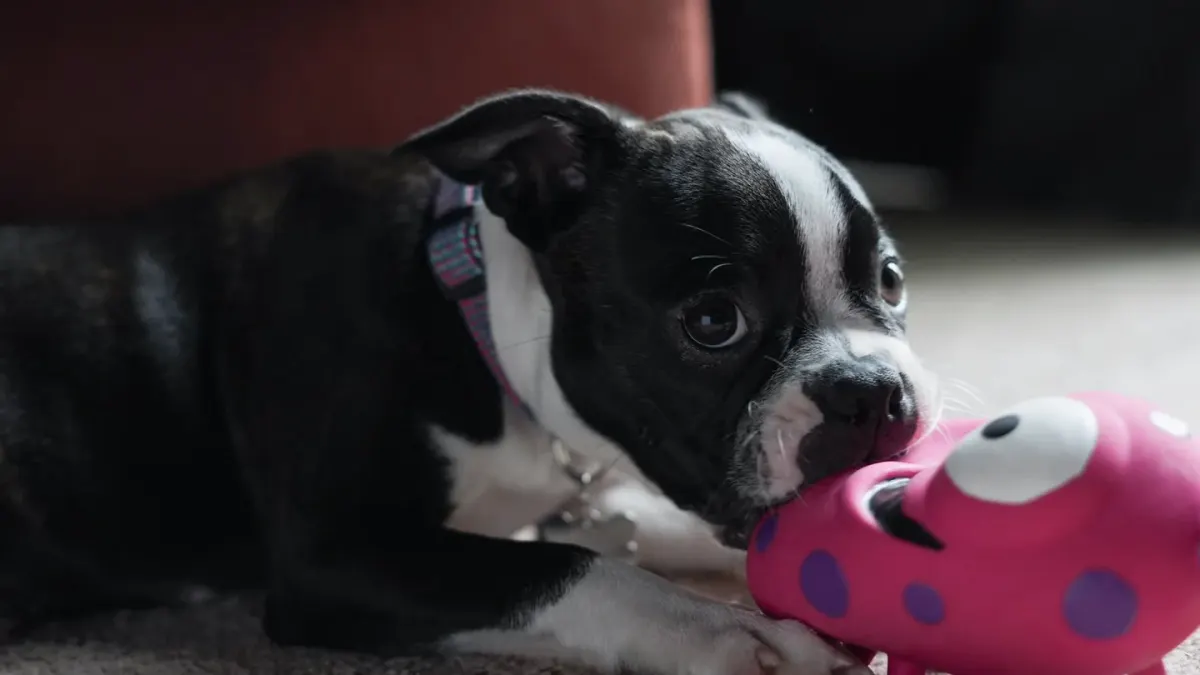
A dog squeaky toy brings out two very different dogs, and you have probably lived with both in the same afternoon.
One dog prances, squeaks in rhythm, and brings the toy back for another toss. The other goes quiet, pins the toy between its paws, and starts working one spot with its back teeth until the fabric thins. That fork — play with you versus take apart without you — decides almost everything about safety.
Paula in Santa Maria learned this with Kyla, her 4-year-old spayed female Doberman Pinscher. Kyla would fetch a plush squeaker for about ten minutes, then settle on her bed and worry the same corner until the squeak turned raspy. Paula started watching for that shift in focus, and when the chewing turned surgical she traded for a treat and put the toy on a shelf for another day.
Play together first, dissect never
Think of squeakers as interactive gear, not chew gear. They are built to make noise when squeezed during fetch, tug-release games, or short training rewards. The plush cover, the seam thread, and the little plastic squeaker inside were never meant to stand up to sustained chewing.
The American Kennel Club notes that toy choice should match your dog’s size and chew style, and that supervision matters most with plush and squeak toys. That lines up with what hands-on testing shows: the same toy can last months for a gentle carrier and less than one evening for a determined dissector.
If your dog lives to squeak and retrieve, keep sessions short, social, and in sight. You toss, you praise, you put the toy away when the game ends.

The sound that flips the switch
The squeak is rewarding by design. For many dogs it mimics prey sounds and raises arousal, which is fun for about five minutes and then tips some dogs into deconstruction mode.
Watch for the change. Loose, bouncy body language means the game is still social. Stillness, hard staring at the toy, picking at one seam, or trying to gag the squeaker silent means your dog has a new job now. Vets often see trouble when that second phase goes unsupervised and pieces of fabric or the squeaker get swallowed.
The American Veterinary Medical Association reminds owners to supervise play and remove damaged toys before small parts become a choking or intestinal-blockage risk. You do not need to wait for stuffing on the floor. A hoarse squeak, a thumb-sized thin spot, or a seam starting to grin open is enough reason to end that toy’s day.
This is also where food context helps. A well-fed, well-exercised dog with an appropriate daily ration and chew outlet is less likely to fixate, though a strong dissector will still dissect. What a squeaker can realistically do is support active play and recovery-day enrichment; it cannot meet chewing needs on its own. Pair it with a sturdy rubber or nylon chew option for solo time, as covered in Interactive Toys vs. Chew Toys: When to Use Each.
What to buy and how to retire it
You do not need to avoid squeakers altogether. Buy for your dog’s actual style, not the package promise.
For gentle to moderate players, a roomy plush with a recessed or double-wrapped squeaker lasts longer and is easier to hear going hoarse. For power chewers, skip thin plush and choose a thicker rubber squeak ball used only for fetch, then stored out of reach. Size up; a squeaker your dog can fit entirely in its mouth is too small.
Check seams, eyes, and tails before each game, the same way you would run through Rope Toys vs. Plush Toys for Chewers: How to Actually Choose. Wash when soiled and inspect again after drying, following How to Clean and Disinfect Dog Toys. When damage shows, do not perform squeaker surgery and hand it back. Toss it.
A skeptical friend might ask: is this overcautious if my dog has never swallowed anything? I would say no. It only takes one swallowed squeaker to turn a cheap toy into an emergency visit. Supervised squeak, then put away.
Keep the rule plain. If you are in the game, squeak away. If your dog starts digging for the noise box, that toy is done.
Frequently asked questions
Can I leave my dog alone with a squeaky toy?
No. Keep squeaky toys as supervised, together-play toys and put them away when you cannot watch. Dogs that chew out squeakers can swallow fabric or plastic and choke or block the intestine.
How do I know when to throw a squeaky toy away?
Retire it at the first thin spot, opened seam, hoarse squeak, or exposed stuffing or plastic. Do not remove the squeaker and keep using a torn plush.
Sources
- Dog Care — American Veterinary Medical Association