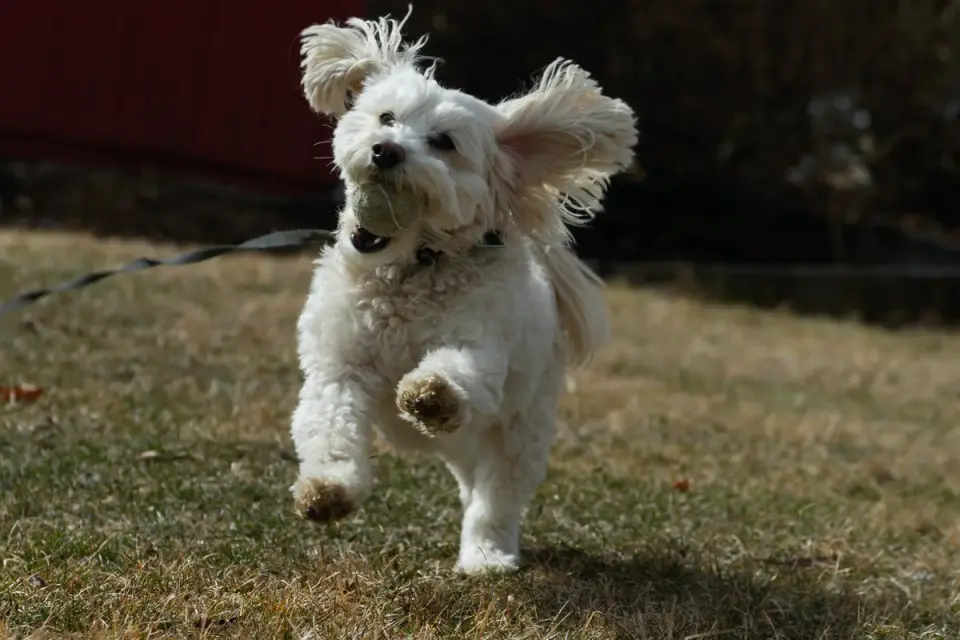
Lawrence did not buy Coquito to fetch. His 2-year-old Miniature Poodle would chase a tennis ball twice, then start circling it, nosing it with his shoulder and barking until someone moved it again. On a 30-foot patio in Glendale, Arizona, that pushing pattern kept repeating, and fetch toys kept failing.
That is the decision fork for a herding ball for dogs: does your dog want to carry something back, or does your dog want to keep something moving?
A herding ball is an oversized, hard-to-grip ball designed to be pushed with the nose, chest, and shoulders rather than picked up and retrieved. Most are 10 to 14 inches in diameter, made from puncture-resistant polyethylene, and meant to roll across grass or turf while the dog circles, stalks, and drives it forward. From a sports-medicine view, that pattern may help support whole-patient health through sustained aerobic movement and problem-solving, though what it can realistically do for diet, mobility, and recovery depends on the dog’s joints, weight, and baseline fitness. Ground that integrative claim in the nutritional evidence: activity supports maintenance energy needs and lean condition, but it does not replace food therapy or rehab when mobility is already limited.
Pushers love it, retrievers quit it
Fetch and herding ask different things of the body and brain. A retriever wants a clean pick-up, a short sprint, and a return to you. A pusher wants prolonged contact, direction changes, and control without carrying.
Breeds selected for gathering and driving livestock — the types described by the American Kennel Club in its Herding Group — are more likely to show that eye-stalk-push sequence. But any high-energy dog that body-checks soccer balls, herds kids, or fixates on wheels and brooms can fit the profile.
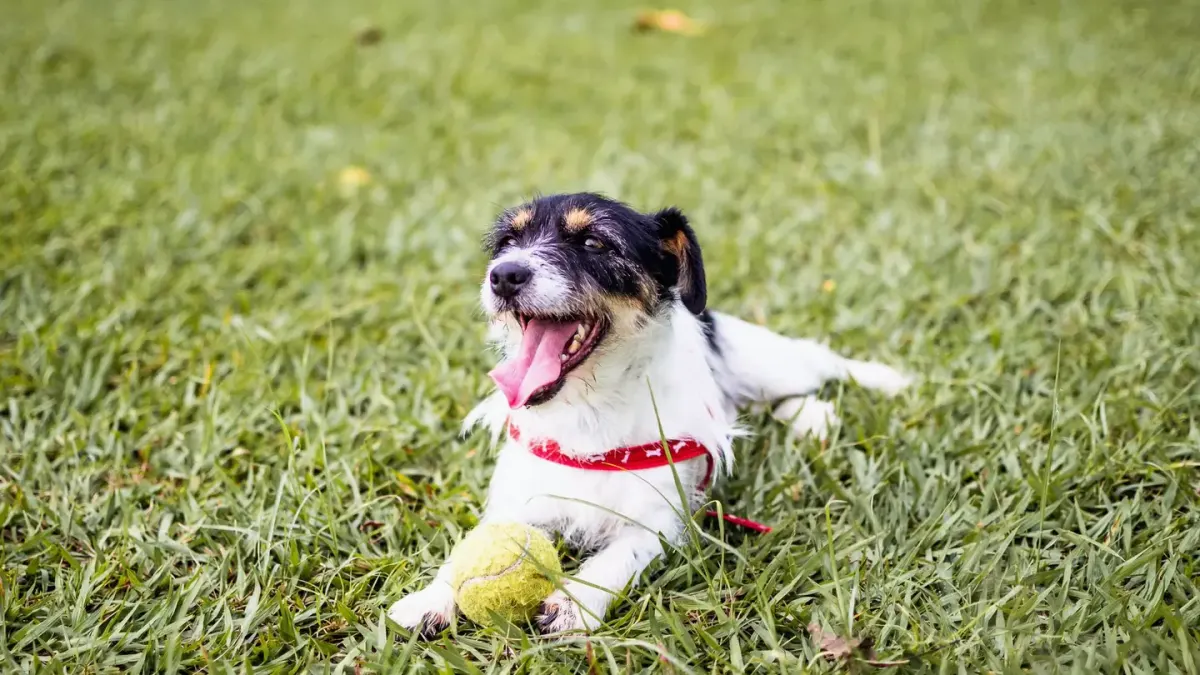
Dogs that simply fetch usually look bored within minutes. They stare at you, wait for a throw, and try to chew the herding ball because they cannot complete their retrieve loop. For background on that mismatch, compare Interactive Toys vs. Chew Toys: When to Use Each and Tennis Balls vs. Rubber Balls for Fetch: Which One Should You Actually Throw?.
Chelsea saw the other side with Tabitha, her 7-year-old spayed female Saint Bernard in Newport News, Virginia. Tabitha would not run repeated retrieves in humid weather, but she would walk-push a large ball for 10 minutes across the yard, then lie down to pant and watch it. The observable change was less evening pacing and calmer settling after dinner. For a giant senior, that low-impact driving was more usable than sprint fetch.
Pushing is still exercise.
Size the ball to the dog, then set the field
Do not buy by enthusiasm. Buy by shoulder height, mouth size, and surface.
The rule I use: the ball should stand taller than the dog’s muzzle can easily open around, so pushing replaces grabbing. For most 40- to 80-pound pushers that means at least a 10-inch ball; for tall or giant breeds, go larger so they drive with chest rather than stooping at the neck. Small dogs under about 20 pounds often do better with a 6- to 8-inch herding-style ball, and many do better skipping the category entirely if they can pick it up and turn it into a chew object.
Hard plastic needs space and traction. Flat grass, packed dirt, or outdoor turf lets the ball roll without launching. Avoid concrete patios, steep slopes, pool decks, and small indoor rooms where a heavy ball can slam baseboards or legs. Heat matters too — herding sessions keep dogs moving continuously, so offer water, work early or late, and see ideas for cooling play in Backyard Sprinkler and Splash Games for Hot Days.
Supervise the whole session and inspect the ball afterward. The ASPCA notes that destructive chewing, chasing, and herding-related behaviors in pet dogs often need management and redirection, and a herding ball is redirection, not an unsupervised babysitter. For cleaning and wear checks between sessions, follow How to Clean and Disinfect Dog Toys.
When should you skip it altogether?
Skip the herding ball if your dog lives to fetch, has fragile teeth or a compulsive chewing habit, guards large objects, or panics at things that do not stop moving. Skip it for off-leash unfenced areas, for dogs with uncontrolled reactivity to wheels and joggers, and for any dog with lameness, exercise intolerance, or cardiac limits until a veterinarian clears sustained pushing work.
My line stays firm: buy a herding ball for the dog that pushes, circles, and controls movement. Keep buying fetch balls for the dog that brings it back.
What would your dog choose if you never threw anything again?
Frequently asked questions
Can small dogs use a herding ball for dogs?
Some can, if the ball is small enough to push but too large to pick up and chew. Many small dogs prefer chase or puzzle toys instead, so watch whether your dog pushes for several minutes or just tries to bite and carry.
How long should a herding-ball session last?
Start with 5 to 10 minutes of supervised pushing on grass with water and rest breaks. End while your dog still wants more, especially in heat or with seniors and giant breeds.
Sources
- Herding Group Standards — American Kennel Club
- Common Dog Behavior Issues — ASPCA