On this page
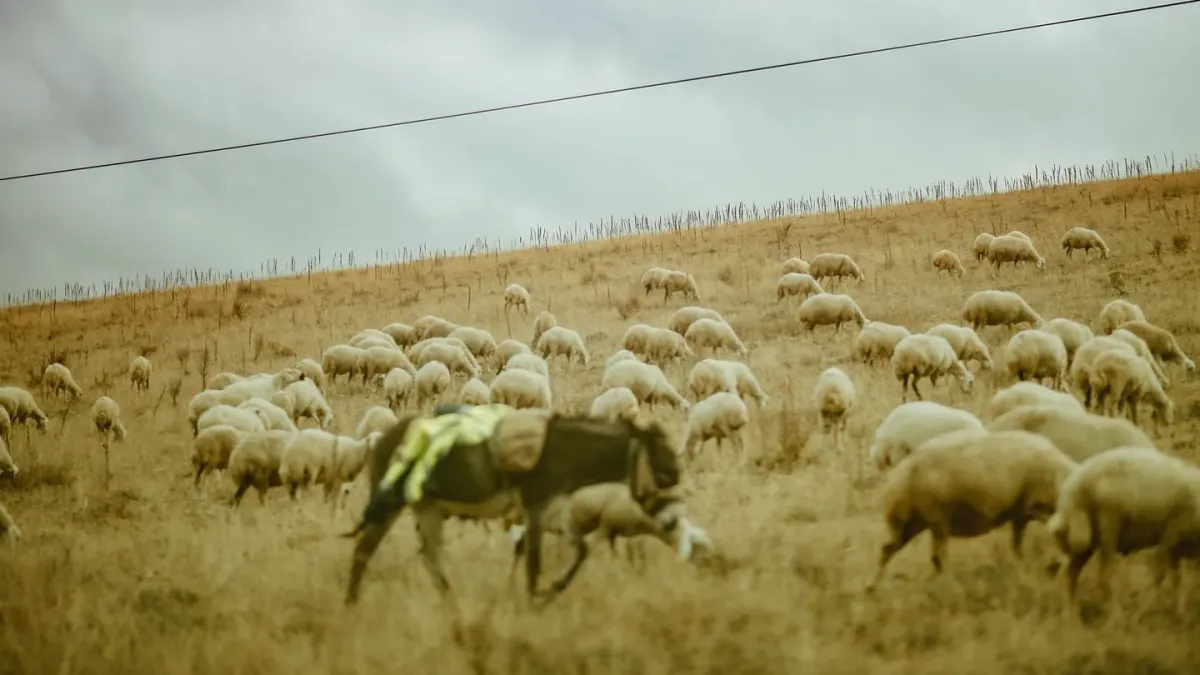
You’ve got a public footpath cutting straight across a grazed field, sheep bunched near the stile, and a dog already pulling ahead — do you go through or take the long way around the hedge?
I take the long way unless I can answer three questions in under a minute: where’s the stock, where’s the exit, and what’s my dog going to drink or eat before I can stop him? That decision fork saves more vet visits than any gear I’ve tested. Food and conditioning matter for how your dog recovers from hills, mud, and cold, but they don’t replace a leash, a recall, and clean water in your pack.
A 4-year-old neutered Labrador at 32 kg came with me last spring on what was supposed to be a 2-mile loop through pasture in lambing season. He’d done 12 uneventful walks on that same path over winter, and his owner figured fitness plus a joint chew meant he was set. At the second gate we found 40 ewes with young lambs pressed against the fence, no separate walkway, and a farm pond the color of pea soup. We turned back to the lane, added 0.8 miles around the field edge, and he finished tired but clean. The quantified change was the detour, not the distance — one extra gate and zero contacts.
Through the gate or around the edge?
Start at the map, not at the stile. Check whether the path crosses grazing, whether livestock are currently in that parcel, and whether there’s a fenced corridor or an alternative bridleway. In the U.K. and much of the U.S., you have a right to pass but not a right to let your dog harass stock, and farmers can act legally if a dog worries sheep.
I scan for fresh signs before I unclip anything: manure piles still steaming, flattened grass beds, bawling calves, rams separated in a small pen. If stock is within 100 yards of the path and there’s no corridor, I keep the leash short or reroute. Electric fencing, barbed wire at nose height, and spring-loaded gates injure more dogs than bulls do.
Keep recall honest. If your dog can’t disengage from sheep at 30 feet with food on the ground, he’s not an off-leash farmland dog that day.
What’s in the ditch, pond, and muck heap?
Farm water looks inviting and often isn’t. Runoff can carry leptospires after rain, slurry, and fertilizer, and warm stagnant ponds can grow cyanobacteria.
The Centers for Disease Control and Prevention notes dogs pick up leptospirosis from water or soil contaminated with urine from wildlife or livestock, which is exactly what field ditches collect. The clinical picture in dogs is well summarized by the Merck Veterinary Manual, including fever, vomiting, and kidney injury, and vaccination remains the practical prevention to discuss with your vet before walking wet pasture regularly.
I carry 500 ml of water for a 60-minute walk and offer it every 15 minutes so my dog isn’t tempted to drink first and ask later. That’s structure, not supplementation.
A 2-year-old Border Collie mix, 18 kg, showed me the tradeoff on a late-August evening after just 3 farm walks that week. She’d been flawless off leash, so her owner let her swim in a shallow 20-foot-wide pond to cool off. Within 9 hours she vomited four times and refused dinner, and we spent the night on small sips of water and a bland recovery diet rather than finishing the weekend loop. She recovered, but the lesson stuck: fitness didn’t filter that water.
Algae mats, white fertilizer granules, slug pellets near barns, and discarded baler twine are all mouth-level hazards. A “leave it” that holds for a dropped treat at home has to hold for a half-eaten carcass in a hedgerow.
Ticks, feet, and the walk back to the car?
Tall field margins are tick habitat from March through November in most states. The Companion Animal Parasite Council recommends year-round tick prevention and a hands-on check after every walk in grass or brush, and farmland edges qualify.
I do the same 90-second check every time: ears and collar line, armpits, groin, between toes, under the tail. I pull grass awns from feet before they migrate, rinse mud from interdigital skin, and look for barbed-wire nicks on the chest of low dogs.
Weigh what a supplement can realistically do for diet, mobility, and recovery here. A complete maintenance diet plus steady conditioning does most of the work for tendon and joint resilience on rutted ground. Omega-3s and joint-support ingredients may help support normal inflammatory response and mobility as part of that diet, but they won’t make a tired dog sure-footed on a slick gate or replace rest after a 5-mile slog through plowing.
That skeptical friend asks: if food doesn’t prevent a lameness, why mention it at all? Because recovery nutrition determines how your dog feels the next morning.
When do you bend the usual route?
You bend it for lambing and calving, for bulls or cows with calves at foot, for recently sprayed or fertilized fields, and for any pond with scum. Give mothers a wide berth, keep dogs on a short lead near cattle, and let stock move away rather than pushing through the middle.
A 9-year-old Beagle at 11 kg changed my own rule last October after 6 nights of stiff rising following longer walks. She’d always done the full 3.1-mile circular past the dairy, but on wet concrete yards and uneven tramlines she started planting her front feet and sniffing instead of trotting. We switched to a 1.2-mile out-and-back on the farm track, kept her on leash past the slurry pit, and fed her evening meal with warm water within an hour of returning. She woke up willing the next two mornings in a row, which told me more than any single supplement label.
If you walk where other dogs walk, you already know the value of reading water and footing first — the same judgment I use for ponds applies to streams and lakes, as I described in Are All Dogs Natural Swimmers? What to Check Before the Water, and the post-walk drink check is cousin to keeping dogs from gulping the wrong water at the shore in How to Stop Your Dog From Drinking Salt Water at the Beach.
My recommendation is plain: leash through stock, carry water, assume ditch water is contaminated, check for ticks and feet at the gate, and feed for recovery after — not before — the hard part.
Sources
- Leptospirosis — Centers for Disease Control and Prevention
- Leptospirosis in Dogs — Merck Veterinary Manual
- Ticks — Companion Animal Parasite Council