
On this page
You have about two seconds when an 80-pound dog lunges after a squirrel, and that moment tells you whether your leash was chosen well. Thin nylon burns your palm, a small clip flexes, and a skimpy loop handle twists in your grip.
A common question is whether you need a longer leash or a special style to fix pulling. For most large dogs, the answer is less exciting: pick for width, hardware, and comfort first, then worry about length. Control comes from how the leash distributes force and how securely you can hold it, not from a clever design.
Toni in Virginia Beach learned this with Gabby, her 4-year-old spayed Australian Shepherd mix. Gabby weighed 62 pounds and walked nicely until she spotted movement, then hit the end in one stride. Toni had a thin 3/8-inch leash with a small bolt clip and no padded handle. After switching to a wider, softer 1-inch leash with a larger locking-style clip and a padded loop, she could keep a relaxed bend in her elbow for a half-mile loop without hand cramping.
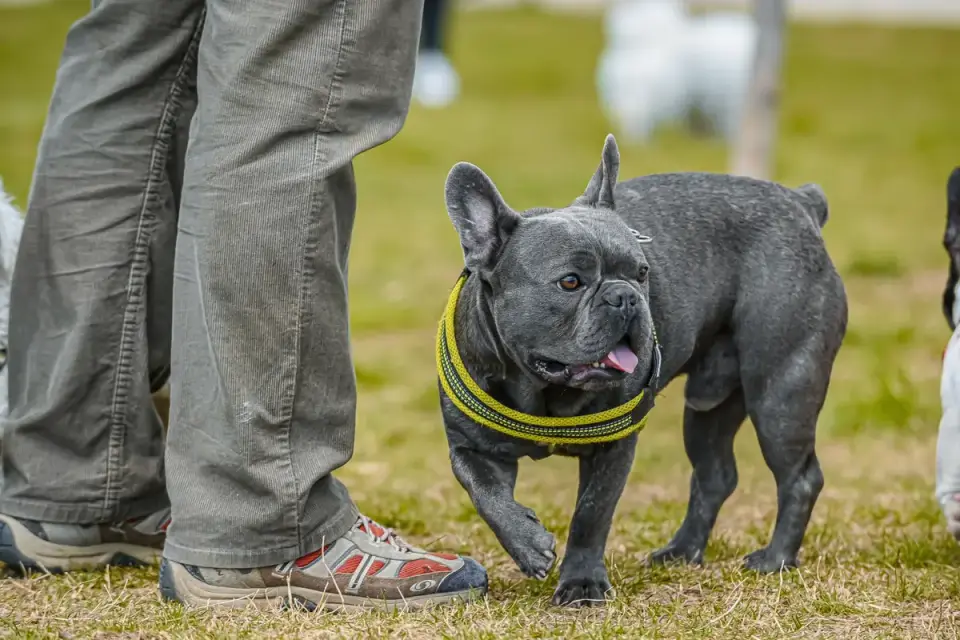
The fork: grip and hardware, or length and looks?
Think of leash shopping as two paths. One path chases length, color, and extra features. The other path starts with what touches you and what connects to the dog.
I recommend the second path for any dog over about 50 pounds. A comfortable width that will not cut in, a clip rated for a strong puller, and stitching you can trust will do more for training than another two feet of webbing. Length still matters for specific exercises, and you can read more in our explainer on long lines versus retractable leashes, but it cannot compensate for a painful handle.
This fits low-stress handling principles too. When your hands hurt, you grip tighter and jerk more. When you feel secure, you stay looser and reward sooner.
What width and material actually do for you
Width spreads load across your palm. For large dogs, most owners handle a 3/4-inch to 1-inch flat leash far more comfortably than a narrow cord or thin strap, especially for loose-leash practice around the neighborhood.
Material changes grip and maintenance. Soft, tightly woven nylon is affordable and strong but can burn on a fast lunge. Leather softens with use and may help support a steady grip once broken in, though it needs care when wet. Coated webbing wipes clean after muddy recalls and stays grippy, which helps if you train in rain or near water.
Vets often see rope-burn blisters and shoulder strains from owners trying to restrain a lunge with a leash wrapped around fingers. Keep a full loop grip, not a finger wrap, and choose a handle you can hold without winding material for security.
The clip is a safety device, not decoration
The clip takes the full shock when your dog hits the end. Look for a large, heavy bolt snap or locking carabiner-style clip with smooth action and a swivel that turns freely, attached with dense, box-stitched webbing rather than a single line of stitches or a flimsy rivet alone.
Check it before every walk. Rinse out sand, confirm the gate springs shut, and retire a leash with a sticky gate, bent tongue, cracked plating, or frayed webbing at the throat. In practice, clip failures almost always show warning signs first.
That hardware check pairs with training mechanics. A secure connection lets you focus on timing and position instead of worrying the leash will part. If pulling is your main concern, review these common training mistakes beginners make before you buy stronger gear to compensate.
Length matters less than you think, until it does
For everyday training with a large dog, a 6-foot leash hits the sweet spot. It gives room to reward at your side, room to sniff on cue, and less slack to manage near traffic.
Shorter 4-foot leashes can help in crowded sidewalks, and longer lines have a place for recall and sniff breaks in open space. The key is matching length to the job rather than using one long leash everywhere, where slack around legs and other dogs creates trips and tangles.
Training method matters more than footage. The American Veterinary Society of Animal Behavior supports reward-based training over aversive techniques, and comfortable gear makes that timing easier to deliver. Pair a well-fitted leash with small, soft rewards you can deliver quickly, as outlined in our guide to training treats by size and value.
Comfort keeps training consistent
You will train more when the leash feels good. Look for soft edges, a padded or double-layer handle, and a second traffic handle closer to the clip for crossings and tight passes.
Test it loaded. Hold the loop, have a friend give a steady pull from the clip end, and notice pressure points. Your baseline should be no pinching, no twisting, and no need to re-grip every few steps.
Also plan for bite risk around other dogs and people. The American Veterinary Medical Association notes that close control and supervision help reduce bite incidents, and a short traffic handle plus a secure clip gives you that close control without wrapping the leash around your wrist.
That is the doubt a skeptical friend usually raises: will a wider, heavier leash just teach my dog to pull harder? Equipment alone does not build loose-leash walking. It buys you safe, pain-free repetitions while rewards do the teaching, and you can fade food gradually as the behavior firms up.
A simple way to choose this week
Bring your dog’s current weight and your hand size to the store, real or online. Choose 3/4-inch to 1-inch width, a large swivel clip with strong stitching, a padded main loop plus a traffic handle, and a 6-foot length for daily work.
Skip thin cord, tiny clips, chain leashes, and heavy multi-feature designs that tire your wrist. Washable webbing or well-conditioned leather will hold up to daily practice, and you can add a separate long line later for field recalls.
Your shoulders and your dog will both notice the difference within a few blocks.
Frequently asked questions
What width training leash is best for a large dog?
Most owners handle a 3/4-inch to 1-inch flat leash most comfortably. It spreads pressure across the palm and is easier to hold during a lunge than thin cord.
What length leash should I use to train a large dog?
A 6-foot leash works for most daily loose-leash work and polite greetings. Save longer lines for open-space recall practice where tangles and traffic are less of a concern.
Does a stronger leash stop pulling?
No. Stronger hardware and a comfortable grip give you safer handling while you teach loose-leash skills with rewards. The training builds the behavior; the leash protects hands and control during repetitions.
Sources
- Humane Dog Training Position Statement — American Veterinary Society of Animal Behavior
- Dog Bite Prevention — American Veterinary Medical Association