On this page
The fork most owners hit is this: do you fix the dog, or do you fix the gear? The honest answer is both, in that order — but you can’t skip the physiology part, because the reflex driving the pulling is not something a dog can simply decide to stop doing.
Opposition reflex is the starting point. When something applies steady pressure against a dog’s body, the instinctive response is to lean or pull back into that pressure, not away from it. It’s an old, largely involuntary pattern, and it explains why a tightening collar so often makes pulling worse instead of better: the dog isn’t choosing to fight the leash, its body is answering the tension automatically.
In my practice I saw this most clearly with a two-year-old Lab mix named Cooper, forty-eight pounds, who came in for a wellness visit with a raspy, honking cough his owners assumed was kennel cough. It wasn’t. He walked on a slip collar, and on our short lap around the parking lot I watched him lean hard into it within the first ten steps, coughing each time the collar cinched down. His owners had tried a stricter collar two months earlier because he’d been “getting worse,” and the cough had started around the same time. We swapped him to a front-clip harness that afternoon. By their three-week recheck, the cough was gone on quiet walks and only returned on the rare day he got overexcited at the dog park.
What’s actually happening at the collar
The mechanism matters more than most walking advice lets on. VCA Animal Hospitals notes that as a dog pulls forward or an owner pulls back, a neck collar tightens and presses directly against the trachea — and the harder the dog pulls, the more pressure builds, which over time can contribute to tracheal irritation or damage. That same resource points out something counterintuitive: aversive collars designed to become more uncomfortable with resistance don’t out-train a well-fitted harness, they just raise the physical cost of the same reflex. A body harness, by contrast, spreads that same pulling force across the chest and shoulders instead of concentrating it on delicate throat tissue.
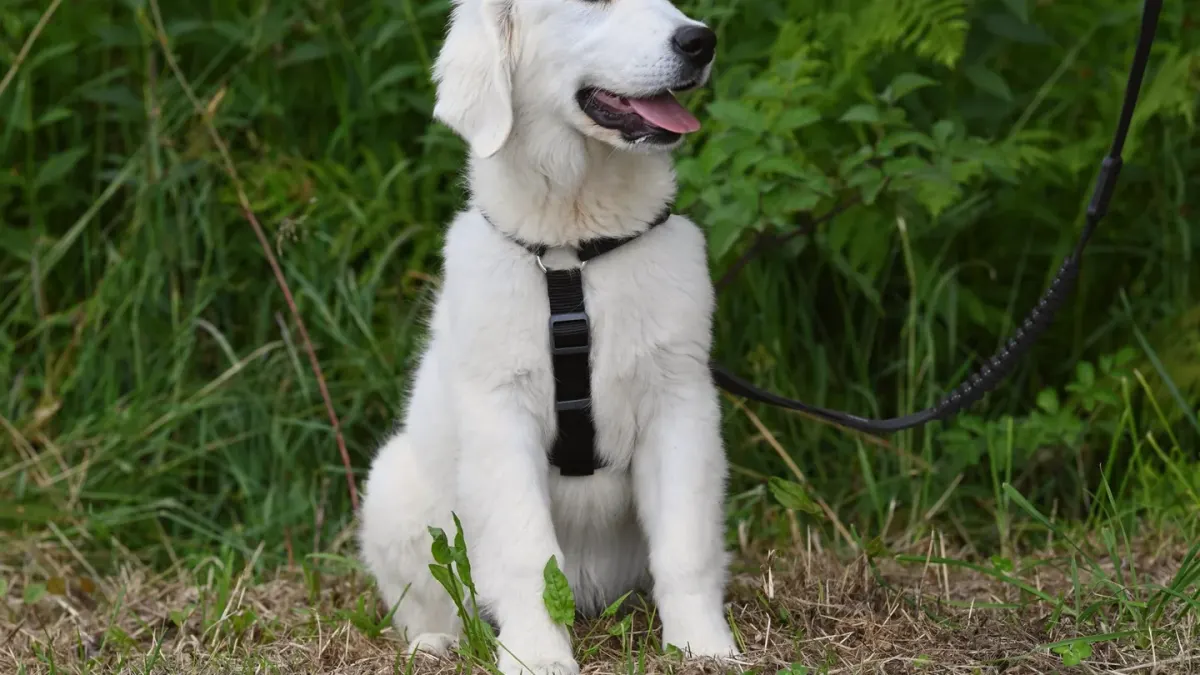
This is where the gear question becomes a training question. If the dog’s own instinct is to lean into pressure, then a device that increases neck pressure when he pulls is training him, inadvertently, to pull harder. A front-clip harness changes the physics: pulling forward swings the dog’s shoulder slightly sideways rather than letting him drive forward with his full weight, which makes hard pulling mechanically less rewarding without adding any discomfort. That’s a management fix, not a behavior fix — it buys you a walk you can survive while the actual training happens underneath it.
Where I land, and the counterargument I take seriously
My default recommendation for a puller is a front-clip harness paired with reward-based loose-leash work, not a stricter collar. The AVSAB position statement backs the reward-based half of that: the Association states that aversive methods, including leash corrections and choke or prong collars, should not be used, and that there’s no evidence they outperform reward-based training in any context.
The fair counterargument is that harnesses alone don’t teach anything — a dog can pull just as hard against a well-padded chest strap, he’ll just be more comfortable doing it. That’s true, and it’s the most common mistake I see: owners treat the harness as the whole solution and stop there. It isn’t. The harness removes the physical penalty for pulling and reduces the discomfort feedback loop; the actual behavior change still comes from marking and rewarding a loose leash, changing direction when tension appears, and building duration gradually, the same way you’d shape any other cued behavior. Gear buys you room to train. It doesn’t replace the training, and a good training treat sized for rapid, low-mess delivery makes those loose-leash reps easier to run in real time.
Building the walk back up
One of the owners I worked with most recently had a fourteen-month-old Border Collie mix, Sadie, who’d pull the moment she hit the front step, before there was even anything to react to. That’s a habit loop, not just a reflex — the leash going taut had become the cue that walks start now, go. We didn’t touch her gear that visit; we changed what happened at the door. She waited for slack before the door opened, got marked and rewarded for it, and her owners practiced the same three-second pause at every threshold for about two weeks before the anticipatory lunge softened. It’s slow, unglamorous work, and it’s also the part that actually sticks, unlike a piece of equipment that only manages the moment.
Marker timing matters here more than owners expect, and this is a good decision fork on its own: a clicker gives more precise timing than a verbal marker in the early stages of shaping a loose-leash behavior, though a well-timed verbal “yes” works fine once the behavior is established. Either way, the marker has to land within about a second of the loose-leash moment for the dog to connect it to anything useful.
If your dog is still lunging hard enough that you can’t safely hold the leash, or the pulling has come with a new cough, gagging, or reluctance to walk, that’s worth a vet visit before it’s worth a training plan — the tracheal-pressure evidence above is exactly why. For dogs newer to leash work generally, it’s also worth confirming you’re not layering a pulling problem on top of gaps a qualified trainer would catch faster than a blog post will; a qualified trainer can assess whether hand signals or added structure would help a specific dog before you invest in more gear.
The bottom line
Start with a front-clip harness to remove the physical reward for pulling, then layer in consistent, reward-based loose-leash training — the harness manages the walk you’re on right now, the training changes the walks you’ll have next year. Owners who try to skip straight to a stricter collar tend to see short-term quiet and long-term coughing, which is the opposite trade most people think they’re making.
For related context, read A Puppy Potty-Training Schedule That Works.
For related context, read Best Training Treats for Dogs: A Buyer’s Guide to Size, Value, and Ingredients.
Frequently asked questions
Is leash pulling a sign of dominance?
No. It's largely driven by the opposition reflex, an involuntary lean into pressure, combined with a learned habit that pulling gets a dog where it wants to go faster.
Will a harness alone stop pulling?
A front-clip harness reduces the mechanical advantage of pulling and removes neck pressure, but it doesn't teach loose-leash walking on its own — pair it with reward-based training.
Sources
- Collar and Harness Options for Training Your Dog — VCA Animal Hospitals
- AVSAB Position Statement on Humane Dog Training — AVSAB